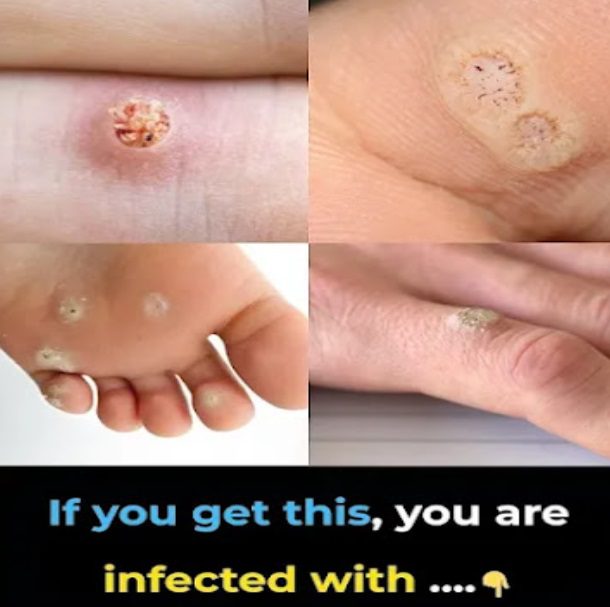
6 Types of Warts Explained: Signs, Symptoms, and Gentle Home Remedies (A Calm, Resourceful Guide)
Warts are common skin growths caused by certain types of the human papillomavirus (HPV). They often develop when the virus enters the skin through tiny cuts or scratches. While most warts are harmless, identifying the type can help you choose the right treatment and know when medical care is needed.
1. Common Warts
Appearance: Rough, raised bumps with a grainy surface. Small black dots may be visible inside.
Common locations: Fingers, hands, knuckles, and knees.
Treatment: Over-the-counter salicylic acid products are often effective when used consistently.
2. Plantar Warts
Appearance: Thick, hard growths that develop on the soles of the feet and may contain tiny black dots.
Common locations: Heels and the balls of the feet.
Symptoms: They can be painful because body weight pushes them inward.
3. Flat Warts
Appearance: Small, smooth, flat-topped bumps that are flesh-colored, pink, or light brown.
Common locations: Face, arms, and legs.
Note: They often appear in groups and may spread through shaving or scratching.
4. Filiform Warts
Appearance: Thin, finger-like growths.
Common locations: Around the eyes, nose, mouth, and neck.
Note: These should not be cut or removed at home.
5. Periungual Warts
Appearance: Rough, irregular bumps around the nails.
Common locations: Around fingernails and toenails.
Note: They may affect nail growth and often require professional treatment.
6. Genital Warts
Appearance: Soft, flesh-colored or gray growths that may appear singly or in clusters.
Common locations: Genital and anal areas.
Important: These are caused by different HPV strains and should always be evaluated by a healthcare professional.
Home Treatment Options
For common and plantar warts, the following treatments may help:
Salicylic acid: The most widely recommended over-the-counter treatment. It gradually removes wart tissue.
Duct tape method: Some people find this helpful, although research has shown mixed results.
Apple cider vinegar: A popular home remedy, but scientific evidence supporting its effectiveness is limited and it may irritate the skin.
Do not use over-the-counter wart removers on the face, genitals, or mucous membranes. People with diabetes, poor circulation, or weakened immune systems should consult a healthcare professional before attempting home treatment.
When to See a Doctor
Seek medical advice if:
- The wart is on the face, genitals, or around the nails.
- It is painful, bleeding, or shows signs of infection.
- It changes rapidly in size, color, or appearance.
- You are unsure whether the growth is actually a wart.
- Home treatment has not worked after several weeks of consistent use.
Frequently Asked Questions
- Are warts contagious?
Yes. HPV can spread through direct skin contact or contaminated surfaces, although not everyone exposed develops warts. - Do warts disappear on their own?
Many do, especially in children, but this may take several months or even years. - Should I cut or pick a wart?
No. Picking or cutting a wart can increase the risk of infection and may spread the virus to other areas of the skin.
Final Thoughts
Most warts are harmless and can often be managed with appropriate home treatment or medical care when necessary. If you are uncertain about a skin growth or if symptoms worsen, consult a qualified healthcare professional for an accurate diagnosis and treatment recommendations.