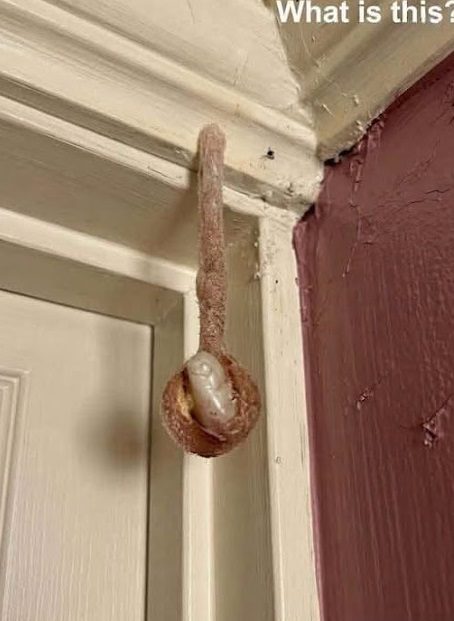
The Hidden Architect: Discovering a Mud Dauber Nest in a Hotel Room (And Why It’s a Moment of Wonder, Not Fear)
Why Finding a Mud Dauber Nest in Your Hotel Room Is Usually Nothing to Fear
Imagine you’ve just arrived at your hotel. You unpack your suitcase, hang up your coat, and suddenly notice a small cluster of dried mud tubes tucked into a corner of the ceiling or behind the curtain rod.
Your first thought might be: “Wasps? In my room?”
Fortunately, those little mud tubes are often the work of mud daubers—solitary wasps that are among the least aggressive wasps you’ll ever encounter. Rather than being a reason to panic, they offer a fascinating glimpse into nature’s engineering.
Meet the Mud Dauber
Mud daubers are solitary wasps that build their nests from tiny balls of wet mud.
Unlike yellowjackets or hornets, they do not live in large colonies and are generally peaceful insects that rarely sting people.
Why Mud Daubers Are Beneficial
1. They’re Solitary and Non-Aggressive
A single female builds the nest, gathers food, and raises her young on her own.
Because there is no large colony to defend, mud daubers have little interest in people and usually ignore human activity.
2. They’re Excellent Natural Pest Control
Mud daubers are skilled hunters.
Their favorite prey includes spiders, even species such as black widows.
The female:
- Hunts a spider
- Paralyzes it (without killing it)
- Places it inside a mud chamber
- Lays one egg
- Seals the chamber
When the larva hatches, it feeds on the stored spider.
This natural behavior helps reduce local spider populations.
3. Their Nests Are Tiny Engineering Projects
Each nest is built one mud pellet at a time.
- The wasp repeatedly:
- Collects wet mud
- Carries it in her jaws
- Shapes it into a tube
- Repeats the process until the nest is complete
The finished nest is a remarkable example of natural architecture.
Are Mud Daubers Dangerous?
Generally, no.
Mud daubers are considered one of the least aggressive wasps.
They usually sting only if:
- They’re trapped against your skin
- They’re accidentally crushed
- They’re handled roughly
Simply being near a nest rarely causes problems.
What Should You Do If You Find a Nest?
If the nest is outdoors or in an area where it isn’t causing any problems, the easiest solution is simply to leave it alone.
If it’s inside your hotel room or another location where it shouldn’t be, notify hotel staff so they can remove it safely.
If removal is necessary:
- Wait until the wasp has left the nest.
- Avoid touching or disturbing an occupied nest.
- Let trained staff remove it whenever possible.
Cleaning the Area
After the nest has been removed:
- Wipe the surface with warm water.
- A little vinegar or mild household cleaner can remove leftover mud.
- Cleaning the area may discourage another mud dauber from rebuilding in exactly the same spot.
Frequently Asked Questions
Will a mud dauber sting me?
Very rarely.
Mud daubers are typically calm and avoid human interaction. They usually sting only if physically threatened.
Can mud dauber nests damage buildings?
No.
Their nests are made from mud attached to surfaces.
They don’t chew wood, tunnel into walls, or cause structural damage like termites or carpenter ants.
What if I see many wasps flying together?
That is probably not a mud dauber.
Large groups usually indicate social wasps such as yellowjackets or hornets. If you notice an active swarm, stay away from the area and notify hotel management.
Final Thoughts
Finding a mud dauber nest may look alarming at first, but these solitary wasps are generally harmless and play an important role in controlling spider populations.
Rather than seeing them as dangerous pests, it’s worth appreciating the remarkable craftsmanship behind their tiny mud homes. If a nest is in an inconvenient location, the safest approach is to have it removed without disturbing the wasp whenever possible.
The next time you spot one of these unusual mud structures, you’ll know it’s less a sign of danger and more a small reminder of the fascinating world of nature.


