Should You Devein Shrimp? What That Little Dark Line Really Means
If you’ve ever prepared shrimp at home, you may have noticed a thin dark line running along its back. Some recipes tell you to remove it, while others barely mention it. For anyone who doesn’t prepare shrimp regularly, this small detail can raise a simple question: Is that dark line something you should always remove before cooking?
The dark line is actually the shrimp’s digestive tract. It may contain traces of digested food and occasionally small particles of sand or grit. Although it isn’t generally considered a safety concern when properly handled and cooked, it can affect the texture and appearance of the finished dish.
Deveining shrimp is a common preparation step in many kitchens, especially when working with larger shrimp. The process is relatively simple and doesn’t require special equipment. Understanding what the dark line is, when removing it makes sense, and how to do it properly can help you prepare shrimp with greater confidence.
What Is the Dark Line in Shrimp?
The dark line running along the back of a shrimp is its digestive tract, sometimes casually called the vein.
Unlike a blood vessel, it is part of the shrimp’s digestive system. Depending on what the shrimp has eaten, it may contain partially digested material or small amounts of sediment.
Its appearance can vary. Sometimes the line is dark and easy to notice, while in other shrimp it may be very thin or barely visible. This difference is one reason some shrimp look completely clean while others require a little more preparation.
The digestive tract is not automatically harmful, but removing it can improve the appearance and eating experience, particularly when the shrimp contains visible grit.
Why Do People Remove the Digestive Tract?
There are several reasons home cooks and professional chefs choose to devein shrimp before preparing a meal.
1. Better Texture
The digestive tract can occasionally contain small particles of sand or grit. Removing it helps reduce the possibility of an unpleasant gritty texture when eating shrimp.
2. Cleaner Appearance
Deveined shrimp often look neater, especially when served whole in pasta dishes, seafood platters, salads, or appetizers.
3. More Pleasant Eating Experience
Some shrimp may have a slightly muddy or bitter taste associated with the material inside the digestive tract. Removing the visible line can help avoid that issue.
4. Better Presentation
When preparing shrimp for guests or special occasions, removing the dark line can give the finished dish a more polished appearance.
How to Devein Shrimp at Home
Deveining shrimp is a straightforward kitchen task. A small sharp knife or a shrimp deveining tool is usually enough.
Step 1: Peel the Shrimp
Remove the outer shell by gently pulling it away from the body. You can leave the tail attached if your recipe calls for it, particularly when preparing shrimp appetizers or grilled shrimp.
Step 2: Make a Shallow Cut
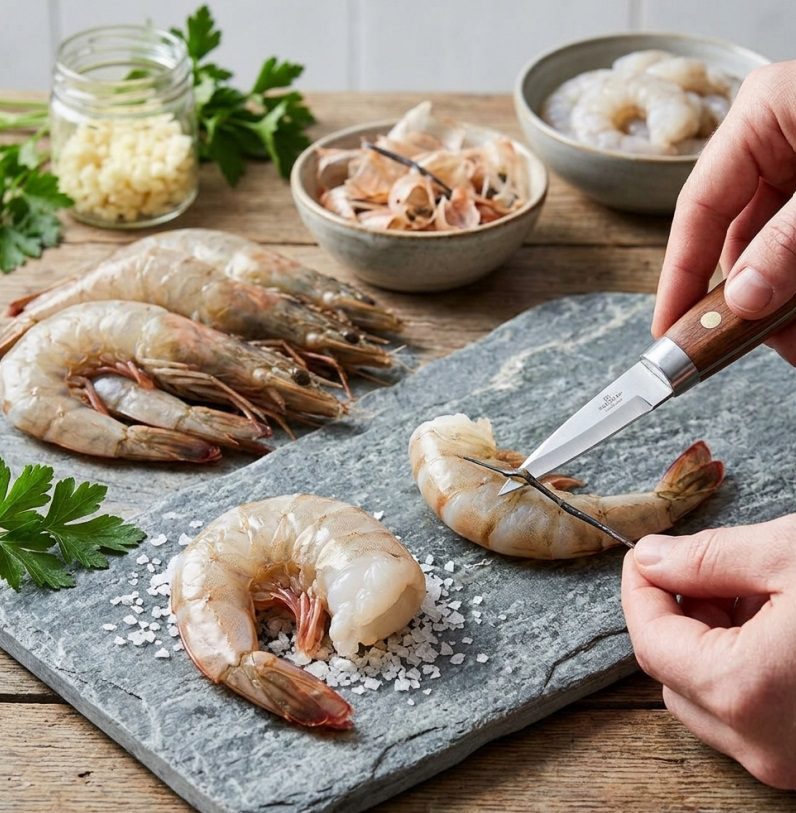
Place the shrimp on a clean cutting board with its back facing upward. Using a small sharp knife, make a shallow cut along the back to expose the dark digestive tract.
Step 3: Locate the Dark Line
Look for the thin, dark line running along the length of the shrimp’s back. It may be more noticeable in larger shrimp.
Step 4: Remove the Digestive Tract
Use the tip of your knife or a small utensil to gently lift the line. Pull it out carefully, taking care not to break the shrimp apart.
Step 5: Clean and Dry the Shrimp
If you notice visible grit or residue, remove it carefully. Pat the shrimp dry with clean paper towels before seasoning or cooking.
Keep raw shrimp separate from other foods, wash your hands and utensils after handling it, and refrigerate it until you’re ready to cook.
Is Deveining Shrimp Always Necessary?
- No. Deveining is not always essential, and the decision often comes down to the size of the shrimp and your personal preference.
- With very small shrimp, the digestive tract may be difficult to see and remove. Many cooks leave it alone when preparing small shrimp for soups, sauces, or mixed seafood dishes.
- Larger shrimp are different because the dark line is generally easier to identify. Removing it can be worthwhile when preparing grilled shrimp, shrimp cocktails, or dishes where the shrimp will be served whole.
- It’s also important to remember that deveining is a preparation preference, not a substitute for proper food handling. Shrimp should always be stored safely and cooked thoroughly, whether the digestive tract has been removed or not.
Variations and Tips
– Choose larger shrimp: Larger shrimp are generally easier to peel and devein because the digestive tract is more visible.
– Use a deveining tool: A dedicated shrimp deveiner can make preparation quicker, especially when preparing several servings.
– Keep the tails on: Leaving the tails attached can make shrimp easier to handle and gives certain appetizers a more attractive presentation.
– Work with chilled shrimp: Keep shrimp refrigerated while preparing them, removing only the amount you need at a time.
– Don’t cut too deeply: A shallow cut is enough to expose the digestive tract without damaging the shrimp.
– Check both sides when needed: Shrimp can also have a lighter-colored digestive tract along the underside. This is generally less noticeable and is not routinely removed.
Final Thoughts
That little dark line along the back of shrimp may look mysterious the first time you notice it, but it’s simply part of the animal’s digestive system. Removing it is a common preparation choice that can improve the appearance and texture of shrimp, especially when working with larger varieties.
The good news is that deveining doesn’t require expensive equipment or advanced cooking skills. With a small knife, a little patience, and a few simple steps, you can prepare shrimp neatly for your favorite seafood recipes.
Next time you’re making shrimp pasta, grilled shrimp, or a seafood appetizer, take a moment to check the back of each shrimp. Understanding this small preparation detail can make cooking seafood at home feel much easier and more familiar.