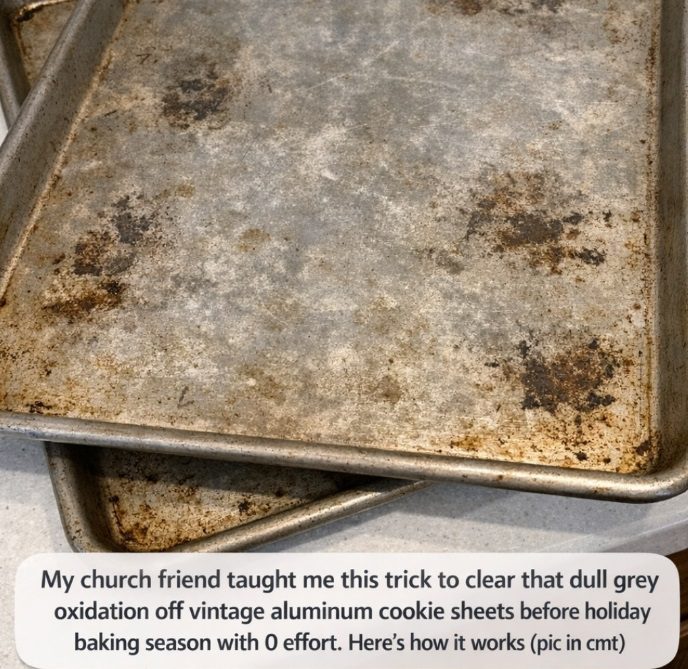
My church friend taught me this trick to clear that dull grey oxidation off vintage aluminum cookie sheets before holiday baking season with 0 effort. Here’s how it works
How to Clean Oxidized Aluminum Cookie Sheets Without Scrubbing for Hours
Every year, right before holiday baking season, I pull out my older aluminum cookie sheets and have the same thought: they still bake beautifully, so why do they look so tired?
Mine had that familiar flat, dull-gray appearance that made them look permanently dirty, even after a good wash with hot water and dish soap. I had almost accepted it as part of owning older bakeware until a friend from church shared a simple vinegar soak she uses before her Christmas baking.
I tried it one weekend, expecting to spend the rest of the afternoon scrubbing. Instead, most of the work was simply letting the pan soak. The result was a cleaner, brighter-looking surface without needing harsh cleaners or aggressive scrubbing.
What Causes That Dull Gray Look?
That cloudy or gray appearance on older bare aluminum is often caused by oxidation. Aluminum naturally develops an oxidized surface layer when it is exposed to air and moisture over time.
It can become more noticeable on older cookie sheets, especially those that have been washed with strong detergents or placed in the dishwasher.
The important thing is to make sure you’re actually dealing with bare aluminum. A dull gray surface is different from baked-on food, grease, or a nonstick coating.
What You’ll Need
1 bare aluminum cookie sheet
4 cups white vinegar
About 12 cups very hot water, or enough to cover the dull areas
1 soft sponge or non-scratch scrubber
Dish soap
2 clean dish towels
A sink, dishpan, or plastic storage container large enough for the pan
If the pan is too large for your sink, a plastic storage container can work well for the soak.
Before You Start
This method is best suited to uncoated, bare aluminum. If your cookie sheet has a nonstick coating, dark finish, or anodized surface, I would not use the vinegar soak without checking the manufacturer’s care instructions first.
If you’re unsure, test a small hidden area before treating the entire pan.
How to Clean Oxidized Aluminum Cookie Sheets
- Wash the pan first: Wash the cookie sheet with hot water, dish soap, and a soft sponge. This removes grease, cooking spray, and loose food residue.
- Prepare the soak: Place the pan in the sink or a large container. Add 4 cups white vinegar followed by about 12 cups very hot water, or enough to cover the dull areas.
- Let it soak: Leave the pan in the solution for about 15–30 minutes. If the oxidation is heavier, you can let it soak for up to about 45 minutes.
- Check the surface: You may notice that the water becomes slightly cloudy or that some gray residue loosens from the aluminum. That is a good time to move on to the next step.
- Wipe gently: Drain the solution and rinse the pan with warm water. Use a soft sponge or non-scratch scrubber to gently wipe the surface.
- There is no need for aggressive scrubbing.
- Repeat if needed: If the pan still looks patchy, repeat the soak rather than reaching for steel wool or a harsh cleaner.
- Wash again: Wash the pan once more with dish soap, rinse thoroughly, and dry it immediately with a clean towel.
For Stubborn Gray Spots
If a few areas still look dull after the vinegar soak, cream of tartar can be useful as a gentle spot treatment.
Mix 2 tablespoons cream of tartar with about 1–2 teaspoons water to make a soft paste. Apply it to the stubborn areas with a soft cloth, let it sit for about 10 minutes, then rinse thoroughly.
I prefer this approach to using something very abrasive because older aluminum can scratch more easily than you might expect.
What Not to Use on Aluminum Cookie Sheets
- I avoid steel wool, oven cleaner, bleach, and very harsh abrasive powders on older bare aluminum.
- These products can scratch the surface, change the appearance of the metal, or leave the pan looking even more uneven.
- I also prefer to hand-wash vintage aluminum bakeware rather than putting it in the dishwasher. Strong dishwasher detergents can cause bare aluminum to become darker or chalkier over time.
Oxidation vs. Baked-On Grease
- Not every dark spot on an old cookie sheet is oxidation.
- Oxidation usually looks flat, cloudy, or gray across the surface. Baked-on grease and food residue are more likely to look brown, black, sticky, or raised.
- If you’re dealing with baked-on grease instead, you may need a separate gentle cleaning treatment. The vinegar soak is not a magic solution for every type of stain.
- Knowing which problem you’re dealing with makes the cleaning process much easier.
Don’t Expect a Brand-New Pan
- One thing I learned is that an old cookie sheet does not have to look factory-new to look good again.
- After cleaning, mine were noticeably brighter and more even, but they still had scratches, darker edges, and a few marks from years of baking.
- Honestly, I don’t mind that. Those little signs of age are part of what makes an old pan feel well loved.
How I Keep Aluminum Pans Looking Better
- After cleaning, I dry the pans immediately instead of leaving them to air-dry.
- If I’m stacking several cookie sheets, I place a thin dish towel between them. I also keep them in a dry cabinet and avoid the dishwasher.
- These small habits help keep moisture and harsh detergents away from the bare aluminum.
When to Clean Them Before Holiday Baking
- I like to clean my older cookie sheets a week or two before holiday baking really gets busy.
- That gives me plenty of time to repeat the treatment if necessary and make sure everything is completely rinsed and dry before I start baking.
- It is much nicer to have clean, ready-to-use pans waiting in the cabinet than to discover a layer of gray oxidation when you’re already halfway through making Christmas cookies.
Final Thoughts
If you have an older bare aluminum cookie sheet that looks cloudy and gray but still bakes beautifully, I wouldn’t replace it just yet.
A simple vinegar-and-hot-water soak can help loosen surface oxidation without hours of hard scrubbing. It costs very little, uses supplies many kitchens already have, and gives tired-looking bakeware a fresh start.
My old cookie sheets still show plenty of signs of their age, but now they look cared for again—and they’re ready for another holiday season of cookies.