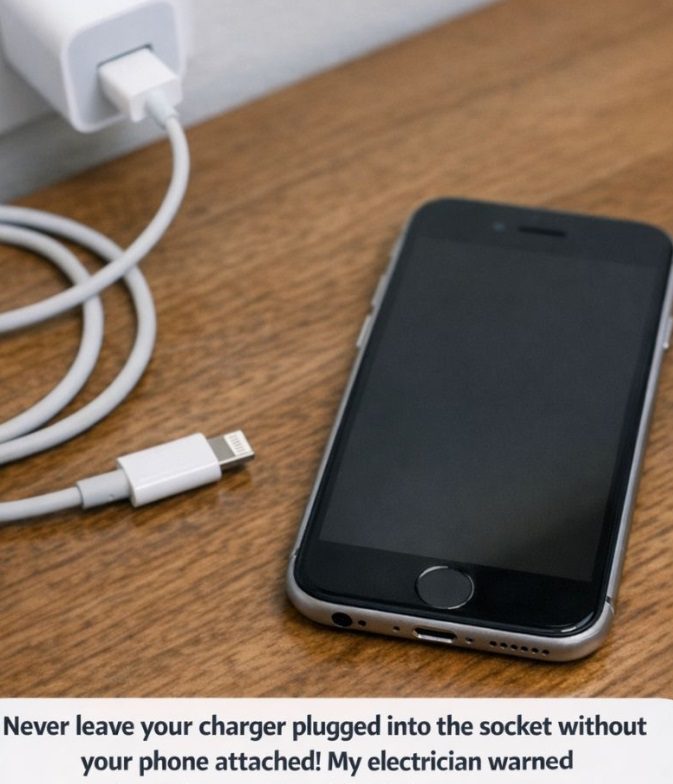
Never leave your charger plugged into the socket without your phone attached! My electrician warned me about this, and I wish I did this sooner!
Introduction
In today’s fast-paced world, convenience quietly shapes many of our daily habits. We rush from one task to the next, leaving small things behind—lights on, tabs open, chargers plugged in. It feels harmless. After all, a phone charger sitting in an outlet doesn’t look dangerous or wasteful. It’s just there, blending into the background of everyday life.
That changed for me after a casual conversation with an electrician during a routine home visit. When the topic of phone chargers came up, his reaction caught me off guard. What seemed like a minor habit, he explained, could slowly drain energy, shorten the life of electronics, and—under the wrong conditions—create real safety concerns inside the home.
Most people aren’t warned about this. There’s no loud alarm or obvious sign something is wrong. But unplugging chargers when they’re not in use is one of those simple changes that quietly protects your home, lowers energy waste, and supports safer everyday living. Here’s why experts take it seriously—and why you might want to start doing the same.
The Surprising Reason Electricians Warn Against Plugged-In Chargers
Electricians often point to something called phantom load (also known as vampire power). This happens when devices continue to draw electricity even when they aren’t actively charging anything.
A single phone charger may only pull a fraction of a watt, but most homes have multiple chargers plugged in around the clock. Over time, this constant draw adds up—especially in households filled with phones, tablets, laptops, and smart devices.
Beyond energy waste, this steady electrical flow can slowly stress a charger’s internal components. Even if it feels cool on the outside, the circuitry inside may be aging faster than expected.
How Idle Chargers Waste Electricity All Day Long
Idle chargers are easy to overlook because they don’t make noise or show visible activity. But they quietly consume power 24/7.
Over the course of a year, multiple unused chargers can contribute to unnecessary electricity usage that shows up on your bill. While it may seem small month to month, it’s part of a larger pattern of standby power that affects many households.
Reducing this kind of waste is one of the easiest ways to make your home more energy-efficient—no renovations, no upgrades, just better habits.
The Hidden Fire Risk of Leaving Chargers Plugged In
While modern chargers are designed with safety in mind, no electrical device is completely risk-free. Continuous power flow can generate heat, especially when chargers are covered, damaged, or poorly ventilated.
Low-quality chargers and aging cables are more vulnerable to internal breakdown over time. This doesn’t mean chargers are dangerous by default—but leaving them plugged in unnecessarily increases exposure to potential issues.
Unplugging chargers when they’re not in use is a simple way to reduce electrical strain and add an extra layer of home safety.
Why Cheap or Worn-Out Chargers Are Especially Risky
Not all chargers are created equal. Cheap or uncertified chargers may lack proper safety features, making them more prone to overheating or failure.
Worn-out chargers can also become problematic. Frayed cords, loose connections, and bent plugs increase stress on outlets and devices. If a charger looks damaged, it’s best to replace it rather than leave it plugged in.
Choosing certified, high-quality chargers—and unplugging them when idle—helps protect both your devices and your home.
The Silent Wear on Outlets, Wiring, and Electronics
Leaving chargers plugged in constantly can cause gradual wear on electrical outlets. Over time, heat and current flow may loosen internal connections, leading to inefficient or damaged sockets.
This kind of wear often goes unnoticed until an outlet stops working properly. Preventing it is far easier than repairing it, and unplugging unused chargers is one small step that helps preserve your home’s electrical system.
Why You’ll Love This Simple Habit Change
- Saves energy without sacrificing convenience
- Supports a safer home environment
- Extends the life of chargers and devices
- Reduces unnecessary electricity costs
- Encourages smarter, more mindful energy use
- This is one of those “easy wins” that fits perfectly into a modern, family-friendly home routine.
Practical Tips for Everyday Use
- Use a power strip so you can turn off multiple chargers at once
- Unplug chargers overnight if they’re not actively charging
- Replace damaged or low-quality chargers promptly
- Keep chargers uncovered and well-ventilated when in use
Common Variations (When It’s Okay to Stay Plugged In)
- Smart power strips that cut off power automatically
- Built-in USB outlets with certified safety features
- Chargers actively connected to devices during charging
- Even then, unplugging after charging is still the safest long-term habit.
Frequently Asked Questions (FAQs)
- Do modern chargers still use electricity when idle?
Yes, many do—even if the amount is small. - Is unplugging chargers really worth it?
Over time, yes. It reduces waste and protects equipment. - Can leaving chargers plugged in damage my phone?
Indirectly, yes—especially if the charger degrades. - Are certified chargers safer?
They are generally more reliable and better regulated. - Is this a fire hazard in every home?
Not always, but reducing unnecessary risk is smart. - What about overnight charging?
Occasional overnight charging is common, but unplug after. - Do tablets and laptop chargers behave the same way?
Yes, they also draw standby power. - Will unplugging lower my electric bill?
Slightly—but consistently over time. - Are power strips better than wall outlets?
Yes, especially ones with switches. - Is this advice electrician-approved?
Yes, it’s a common recommendation from electrical professionals.
Final Thoughts
Unplugging phone chargers when they’re not in use may feel like a small, almost insignificant habit—but small habits often make the biggest difference. It’s an easy way to reduce energy waste, protect your devices, and support a safer home environment without changing your lifestyle.
Sometimes, the smartest solutions aren’t about buying something new—they’re about using what we already have a little more wisely.


