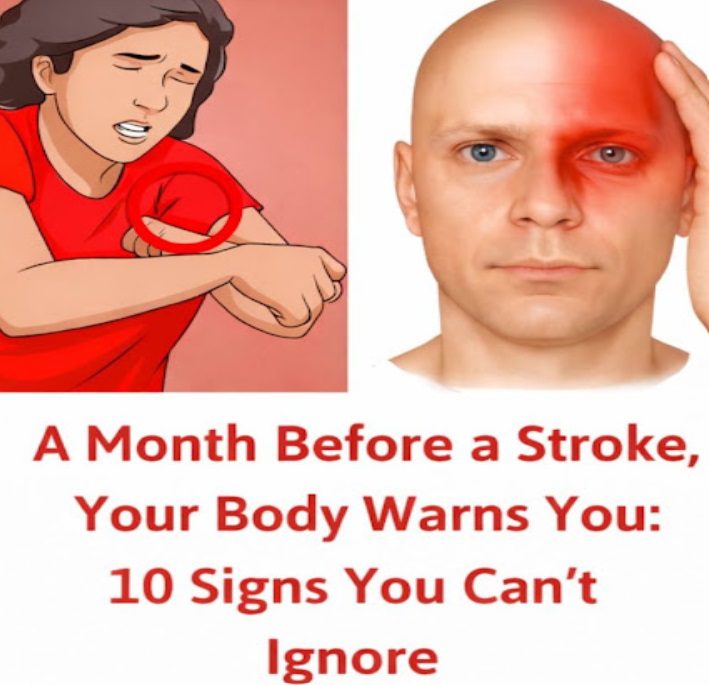
The Body’s Gentle Whisper: 10 Early Warning Signs Before a Stroke (And How to Listen with Care)
A stroke is a medical emergency that occurs when blood flow to part of the brain is interrupted. In some cases, warning signs may appear minutes, hours, or even days before a major stroke. Recognizing these symptoms and seeking immediate medical attention can significantly improve outcomes.
1. Sudden Severe Headache
A sudden, intense headache—especially one unlike any you’ve experienced before—may be a warning sign of a stroke, particularly if it is accompanied by nausea, vomiting, or changes in vision.
2. Numbness or Weakness
Sudden weakness or numbness affecting the face, arm, or leg, especially on one side of the body, is one of the most common stroke symptoms.
3. Difficulty Speaking or Understanding
Slurred speech, trouble finding words, or difficulty understanding others may indicate reduced blood flow to the brain.
4. Vision Changes
Sudden blurred vision, double vision, or vision loss in one or both eyes should never be ignored.
5. Loss of Balance or Dizziness
Unexpected dizziness, difficulty walking, or loss of coordination can occur during a stroke, particularly when the back part of the brain is affected.
6. Sudden Extreme Fatigue
Some people, especially women, may experience unusual or overwhelming fatigue before or during a stroke. Although this symptom is less specific, it should be evaluated if it occurs alongside other warning signs.
7. Nausea or Vomiting
Unexplained nausea or vomiting, particularly when combined with dizziness or other neurological symptoms, may occur in certain types of stroke.
8. Sudden Confusion or Memory Problems
Brief episodes of confusion or difficulty remembering recent events may be associated with a transient ischemic attack (TIA), sometimes called a “mini-stroke.”
9. Chest Pain or Shortness of Breath
Although these symptoms are more commonly associated with heart conditions, they may occur alongside stroke in some individuals, especially those with underlying cardiovascular disease.
10. Sudden Behavioral or Personality Changes
Unexpected changes in mood, confusion, or behavior can sometimes result from changes in brain function caused by a stroke.
Remember the FAST Test
If someone suddenly develops possible stroke symptoms, use the FAST method:
F – Face: Ask them to smile. Does one side of the face droop?
A – Arms: Ask them to raise both arms. Does one arm drift downward?
S – Speech: Is their speech slurred or difficult to understand?
T – Time: Call your local emergency services immediately. Rapid treatment is critical.
What Is a TIA?
A Transient Ischemic Attack (TIA) is a temporary interruption of blood flow to the brain. Although symptoms usually disappear within minutes or hours, a TIA is a serious warning sign that a future stroke may occur. Anyone experiencing symptoms of a TIA should seek immediate medical evaluation.
How to Reduce Stroke Risk
You may help lower your risk by:
Controlling high blood pressure.
Managing diabetes and cholesterol.
Avoiding smoking.
Exercising regularly.
Eating a balanced diet.
Maintaining a healthy weight.
Following your healthcare provider’s recommendations.
Final Thoughts
Stroke symptoms should always be taken seriously. If you or someone nearby develops sudden weakness, speech difficulty, vision changes, or other possible warning signs, seek emergency medical care immediately. Early diagnosis and treatment can greatly improve recovery and reduce the risk of permanent disability.