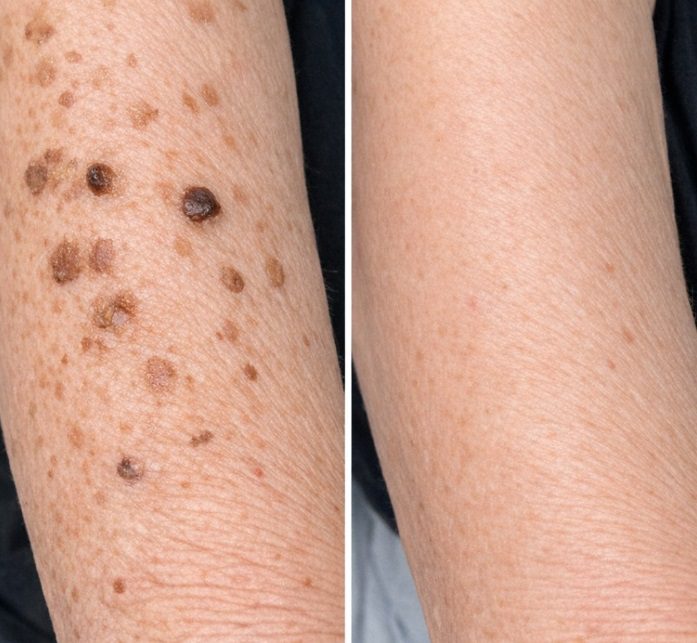
Rub this 1 mixture on your forearms and get rid of crusty spots, dark patches, and waxy growths
Rough, Crusty, or Waxy Spots on Your Forearms? What You Should Know Before Trying a Home Remedy
If you have rough, crusty spots on your forearms, darker patches that look different from the surrounding skin, or small waxy bumps that seem to appear out of nowhere, it’s understandable to look for a simple home remedy. Many of us keep familiar ingredients like oatmeal, baking soda, and coconut oil around and wonder whether a homemade mixture might help.
But changes in the skin are not all the same. A dry, flaky patch may need nothing more than gentle moisturizing, while a rough spot caused by sun damage or a new growth may need a professional examination. Applying the same homemade mixture to every type of skin spot is not a safe way to make them disappear.
The better approach is to understand what these changes might be, recognize warning signs, and use gentle skin-care habits without delaying a medical evaluation when something looks unusual.
1. Why a One-Mixture Fix Is Not a Good Idea
Crusty spots, dark patches, and waxy growths can have several different causes. Dry skin and irritation may improve with a fragrance-free moisturizer. A waxy, raised growth could be a seborrheic keratosis, which is usually harmless. However, a rough, scaly patch on a sun-exposed forearm could be actinic keratosis, a precancerous skin growth.
These conditions can sometimes look similar without a proper examination. That is why it is important not to assume that a spot is harmless simply because it looks dry or feels rough.
I would avoid applying lemon juice, vinegar, baking soda pastes, essential oils, or other harsh homemade treatments. They can irritate or damage the skin, cause inflammation, and make it harder to evaluate the original spot.
2. What Crusty Spots on the Forearms Might Be
Several skin conditions can cause rough or crusty areas on the forearms.
One possibility is actinic keratosis. These spots develop after repeated ultraviolet exposure over the years. They often feel rough or sandpapery and may be easier to feel than to see. Their color can vary, including pink, red, tan, or skin-colored.
Another possibility is dry skin or dermatitis. These conditions may cause flaking, itching, redness, or irritation. They can be triggered by frequent washing, certain soaps, fragrances, detergents, or environmental factors.
Although moisturizing may help ordinary dryness, it cannot treat actinic keratosis. If a rough spot is persistent, new, changing, or located on skin that has received years of sun exposure, arrange a professional skin examination rather than relying on a home remedy.
3. What Dark Patches May Mean
Dark patches on the forearms can develop for several reasons, including sun exposure, aging, healed insect bites, inflammation, or post-inflammatory hyperpigmentation.
Sometimes, a flat patch of darker skin remains after irritation has settled. However, not every dark spot is simply an age spot or leftover pigmentation.
Pay attention to areas that change in size, shape, or color. A spot with an irregular border, several colors, or an unusual appearance compared with other marks on your skin should be checked by a healthcare professional.
The ABCDE guide can help identify warning signs in pigmented spots:
- A – Asymmetry: One half looks different from the other.
- B – Border: The edges are uneven or poorly defined.
- C – Color: The spot has several different colors or shades.
- D – Diameter: It is larger than 6 millimeters, although concerning spots can be smaller.
- E – Evolving: Its size, shape, color, or appearance is changing.
You do not need to wait until a spot shows every feature before seeking an examination.
4. What Waxy Growths Often Turn Out to Be
Waxy growths that appear to be stuck onto the skin are sometimes seborrheic keratoses. These common, usually harmless growths can be tan, brown, gray, or almost black. Their surfaces may look waxy, rough, or slightly wart-like.
They can appear on different parts of the body, including the arms, chest, back, and face. Some remain small, while others gradually become larger or thicker.
Most seborrheic keratoses do not need treatment. However, a dermatologist should examine a growth that changes quickly, becomes irritated, bleeds, or looks different from typical growths.
Never try to scrape, cut, burn, or dissolve one yourself. Apart from the risk of bleeding, infection, and scarring, a growth that looks harmless may actually be another type of skin condition.
5. Warning Signs That Should Not Be Ignored
It is worth paying attention to any skin change that does not look or behave like ordinary dryness.
Arrange a medical examination if you notice:
- A spot that is growing or changing in appearance.
- A mark with an irregular shape or several colors.
- A growth that bleeds without being scratched or picked.
- A sore that does not heal or repeatedly returns.
- A rough patch that keeps crusting or becoming irritated.
- A firm growth that continues to change.
- A new spot that looks noticeably different from the others.
A changing or bleeding spot should not be left untreated while you experiment with homemade mixtures. If you are concerned about a particular area, contact a dermatologist or primary care clinician promptly.
6. A Gentle At-Home Routine for Dry, Rough Skin
If the problem is ordinary dryness without a suspicious or changing spot, a simple skin-care routine may help.
Start by washing your forearms with lukewarm water and a gentle, fragrance-free cleanser. Avoid very hot water and harsh soaps, which can make dry skin feel worse.
After washing, gently pat your skin dry rather than rubbing it with a towel. Apply a thick, fragrance-free moisturizer while the skin is still slightly damp.
Look for products containing ingredients such as:
- Petrolatum
- Ceramides
- Glycerin
- Dimethicone
- Colloidal oatmeal
For very dry areas, a simple ointment such as petroleum jelly can help hold moisture in the skin. Reapply moisturizer whenever the skin feels dry or tight.
This routine may improve ordinary dryness and flaking, but it will not remove suspicious growths or treat precancerous spots.
7. A Simple Moisturizing Option Instead of a Harsh Homemade Mixture
If you prefer keeping your skin-care routine simple, you do not need an elaborate kitchen recipe.
A fragrance-free cream or plain petroleum jelly is usually a more practical choice than mixing several household ingredients together. Apply a thin layer to clean, slightly damp skin, especially after bathing and before bedtime.
Choose a product that does not sting or irritate your skin. If you develop redness, burning, or worsening itching, stop using it and ask a healthcare professional for advice.
Remember that moisturizers are intended to support the skin barrier. They cannot safely remove waxy growths, erase suspicious dark patches, or treat actinic keratosis.
8. Ingredients I Would Avoid Applying to Forearm Spots
Some homemade skin remedies can do more harm than good, particularly when the skin is already irritated or sun-damaged.
I would avoid applying:
- Lemon juice or other citrus juices
- Apple cider vinegar
- Baking soda pastes
- Garlic
- Toothpaste
- Undiluted tea tree oil
- Hydrogen peroxide
- Rough sugar, salt, or coffee scrubs
Acidic and irritating ingredients can cause redness, burning, and inflammation. Citrus juice can also trigger a skin reaction after exposure to sunlight.
Scrubbing rough patches may remove some loose flakes temporarily, but it does not address the cause of the spot. Excessive friction can make irritation worse and leave darker marks behind.
9. Why Sun Protection Matters
Your forearms receive more sunlight than you may realize. Driving, gardening, walking outdoors, and everyday activities can all add to years of ultraviolet exposure.
A useful daily habit is applying a broad-spectrum sunscreen with SPF 30 or higher to exposed skin. Follow the product instructions and reapply at least every two hours when spending time outdoors, as well as after swimming or heavy sweating.
Protective clothing can also make a difference. Lightweight long sleeves, shade, and avoiding prolonged exposure during the strongest sunlight hours are practical ways to reduce further sun damage.
Sun protection does not remove existing growths, but it helps protect the skin from additional ultraviolet damage.
10. What a Dermatologist May Recommend
Treatment depends on the actual diagnosis, which is why identifying the spot correctly matters.
If a clinician diagnoses actinic keratosis, treatment may include freezing the spot with liquid nitrogen, prescription creams such as 5-fluorouracil or imiquimod, diclofenac gel, or photodynamic therapy. The best option depends on the number of spots, their location, and the patient’s individual circumstances.
If a growth is a seborrheic keratosis, treatment may not be necessary. When removal is appropriate because it becomes irritated, catches on clothing, or needs further examination, a dermatologist may use methods such as freezing or curettage.
Dark patches require a different approach depending on their cause. Some may need no treatment beyond sun protection, while others require further examination or specific medical care.
11. How to Keep Track of Changes at Home
Taking photographs can help you notice changes that might otherwise be easy to overlook.
If you have a spot that has already been assessed or are monitoring an area while arranging an appointment, take a clear photograph in consistent lighting. Include a ruler nearby for scale, and record any changes in size, shape, color, or texture.
You can also write down whether the spot itches, bleeds, becomes tender, or repeatedly develops a crust.
Photographs are useful for documenting changes, but they cannot confirm whether a spot is harmless. Do not wait several weeks to collect pictures if a growth is already changing, bleeding, or otherwise concerning.
12. A Practical Reminder: Be Gentle With Your Skin
When a skin spot appears, it can be tempting to try several remedies in the hope that one will make it disappear. But more products and stronger ingredients do not necessarily mean better results.
For ordinary dry skin, a gentle cleanser, regular moisturizing, and sun protection are sensible starting points. Avoid picking at rough areas, scraping growths, or applying irritating household ingredients.
Most importantly, do not mistake a persistent or changing skin lesion for simple dryness. Getting an unusual spot checked early is a much better approach than trying to remove it yourself.
Sometimes the most helpful skin-care routine is the simplest one: protect the skin, keep it moisturized, and know when a professional examination is needed.
Medical Disclaimer: This article is for general informational purposes only. It does not provide medical advice, diagnosis, or treatment. A healthcare professional should evaluate new, changing, bleeding, or persistent skin growths.