How to Remove Hard Water Stains From a Toilet Bowl With Just One Product (No Scrubbing Required!)
We’ve all been there: you lift the toilet lid, and there they are—chalky white or rusty brown rings clinging stubbornly below the waterline. No matter how much you scrub, those hard water stains just won’t budge.
Good news: you don’t need harsh chemicals, elbow grease, or a magic wand. In fact, you probably already have the one product that can dissolve these stains overnight—white vinegar.
Yes, that humble $2 bottle in your pantry is your secret weapon against limescale, mineral deposits, and unsightly rings. Here’s how to use it like a pro.
Why Vinegar Works (The Science Behind It)
Hard water stains are caused by minerals like calcium and magnesium left behind when water evaporates. These form a chalky, cement-like residue that clings to porcelain.
Vinegar contains 5% acetic acid, which safely dissolves mineral deposits without scratching surfaces or releasing toxic fumes. It’s eco-friendly, non-toxic, and safe for septic systems.
Step-by-Step: The Overnight Vinegar Method
1. Empty the Bowl
Flush the toilet to lower the water level as much as possible. Use a small cup to scoop out excess water if needed—the less water, the more concentrated the vinegar.
2. Pour in Vinegar
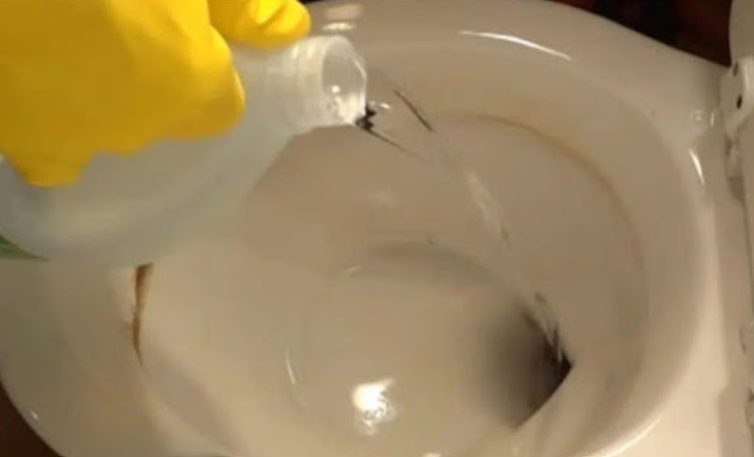
Pour 1–2 cups of undiluted white vinegar directly into the bowl, making sure it covers all stained areas above and below the waterline.
For tough stains: Add ½ cup baking soda after the vinegar—it creates a gentle fizz that helps lift grime (but vinegar alone works great!).
3. Let It Sit Overnight
Cover the bowl with a lid or towel (to prevent evaporation) and let it work at least 6–8 hours, preferably overnight.
4. Scrub & Flush
In the morning, use a toilet brush to gently scrub—the stains should wipe away easily. Flush to rinse.
Stubborn ring? Repeat or let vinegar sit longer (up to 24 hours).
Pro Tips for Extra Tough Stains
Use warm vinegar: Heat it slightly (not boiling) for faster results.
Target the rim: Soak paper towels in vinegar, press them under the rim, and let sit overnight.
Prevent future buildup: Once a week, pour 1 cup vinegar into the bowl and let sit 30 minutes before flushing.
What Not to Do
❌ Don’t mix vinegar with bleach—creates toxic chlorine gas.
❌ Don’t use abrasive cleaners—they scratch porcelain, making stains worse over time.
❌ Don’t ignore it—hard water stains get harder to remove the longer they sit.
When Vinegar Isn’t Enough
If stains persist after 2–3 treatments, you may have iron or manganese deposits (common in well water). In that case:
Try a citric acid solution (1 tbsp citric acid + 1 cup hot water)
Or use a pumice stone (wet thoroughly and glide gently—never dry!)
Never use a pumice stone on colored or antique toilets—it can scratch.
The Bottom Line
You don’t need expensive cleaners or back-breaking scrubbing to keep your toilet sparkling. White vinegar does the heavy lifting while you sleep—leaving your bowl clean, fresh, and guest-ready.
So next time you spot that chalky ring, reach for the vinegar, not the bleach. Your toilet—and your peace of mind—will thank you.
“The best cleaners aren’t always the strongest—they’re the smartest.”
Tried this method? Did it work for you? Share your results below—we’re all about clean homes and simple solutions!