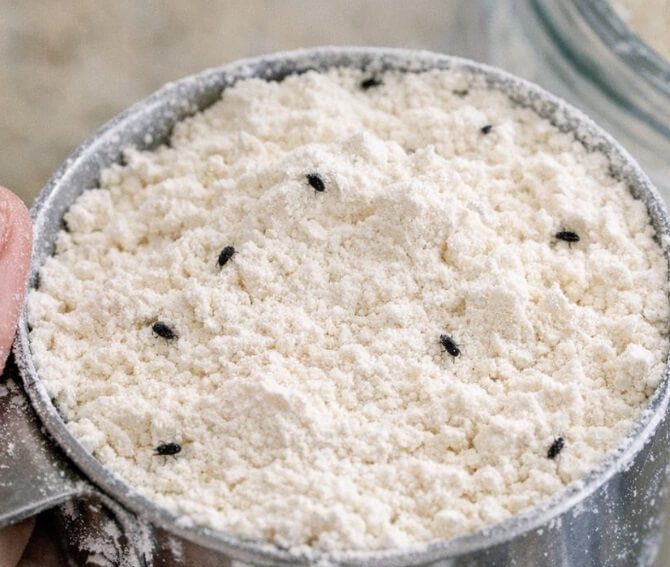
I found these tiny black specks moving in my sealed flour jar — how did they get in?
Tiny Black Specks Moving in Your Sealed Flour Jar? Here’s What They Might Be
Finding tiny black specks moving in your flour jar can be an unpleasant surprise, especially when you’re getting ready to bake. You might wonder how these little insects got inside a sealed container and whether your flour is still safe to use.
Pantry pests are more common than many people think. They can enter your kitchen through food packages, sometimes before you even bring them home. Here’s what you should know and how to keep them away.
1. What Are Those Tiny Black Specks in Your Flour?
Those tiny insects may be flour beetles, grain weevils, or other pantry pests. They’re usually only a few millimeters long and can be difficult to notice when mixed with flour.
Some insects or their eggs may already be present in grains before processing and packaging. Although accidentally swallowing a small number is generally unlikely to cause serious harm, visibly infested flour should always be discarded.
2. How Do Bugs Get Into Flour Before You Seal the Jar?
Pantry insects don’t always enter through an open container. Some infest grains during storage or processing, while others can enter food packages before they reach the store.
Their eggs are extremely small and difficult to spot. This means bugs may hatch inside your flour even after you’ve transferred it into a clean, sealed jar.
3. The Life Cycle Happening Inside Your Flour
Most pantry insects develop through four stages: egg, larva, pupa, and adult.
Depending on the species and temperature, development can take several weeks. Warm conditions may speed up the process, allowing insects to multiply and spread to other stored foods.
4. Why a Sealed Jar Doesn’t Always Stop Pantry Bugs
Airtight containers help prevent new insects from entering, but they cannot eliminate eggs or larvae already present in the flour.
Some pests can continue developing inside a sealed jar. Loose lids or damaged seals may also allow insects to move between pantry products.
Glass jars and sturdy food-safe containers with tight-fitting lids are good storage choices.
5. Other Signs Your Flour May Be Infested
Besides visible insects, look for:
- Small larvae or eggs.
- Fine webbing or unusual clumps.
- A musty or unpleasant smell.
- Damaged food packaging.
- Insects around pantry shelves and containers.
If you notice these signs, inspect nearby flour, rice, pasta, cereal, and other dry goods.
6. Is It Dangerous If You’ve Already Eaten Some?
Accidentally swallowing a small number of common pantry insects is generally not expected to cause serious health problems.
However, infested flour may contain insect remains, eggs, larvae, and waste. Stop using it and discard it. Seek medical advice if you develop unusual symptoms, especially signs of an allergic reaction.
7. What Should You Do With Contaminated Flour?
If you discover insects in your flour, don’t simply sift them out.
Instead:
- Seal the contaminated flour in a plastic bag.
- Dispose of it in an outdoor rubbish bin.
- Wash the storage container with warm, soapy water.
- Dry it completely before using it again.
- Inspect nearby pantry products for insects.
8. How to Clean Your Pantry After an Infestation
Remove everything from your pantry and check each package carefully. Discard any visibly infested food.
Vacuum shelves, corners, and cracks where insects might hide. Then wipe the surfaces with warm, soapy water and let everything dry completely.
Avoid spraying insecticides directly near food or food storage areas.
9. Smart Shopping Habits That Help Prevent Weevils
Check flour and grain packages before purchasing. Avoid products with damaged packaging, holes, or signs of moisture.
Buying smaller quantities can also help prevent ingredients from sitting unused for long periods. Once home, inspect your products before storing them.
10. Simple Storage Tricks to Keep Bugs Away
A few simple habits can help protect your baking supplies:
- Use airtight glass or sturdy plastic containers.
- Store flour in a cool, dry cupboard.
- Keep opened packages properly sealed.
- Clean containers before refilling them.
- Use older ingredients first.
- Freeze newly purchased flour for 4–7 days as a precaution against potential insect eggs and larvae.
Keep flour sealed while freezing and allow it to return to room temperature before opening.
11. When Should You Call a Pest Control Professional?
If pantry insects keep returning despite removing contaminated food and cleaning thoroughly, there may be another hidden source.
A pest control professional can identify the insects, locate the infestation, and recommend appropriate treatment.
Final Thoughts
Finding tiny black specks moving in your flour jar isn’t a pleasant experience, but pantry pests are a common problem. They don’t necessarily mean your kitchen is dirty.
The best approach is to discard contaminated flour, inspect nearby products, and use proper airtight storage. With a little attention, you can keep your pantry clean and your baking ingredients ready for the next homemade treat.
Enjoyed this article? If you did, feel free to share it with your family and friends. Your kindness and support mean so much to us and encourage us to keep sharing more helpful tips with you!
Thank you so much for being here and for your continued support. We truly appreciate you!