Tiny Teeth, Big Possibilities: The Promise of Stem Cells in Baby Teeth
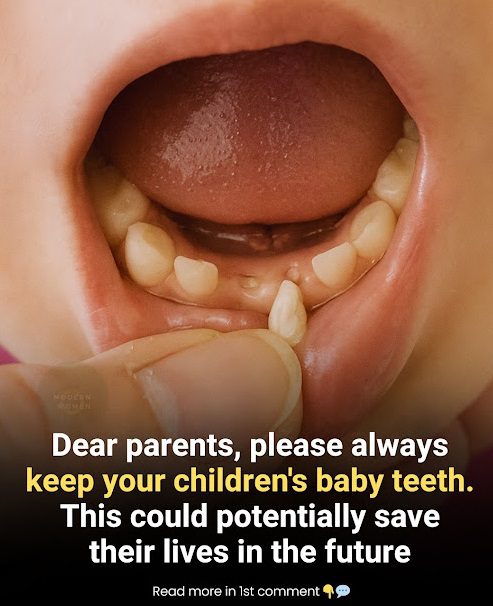
When a child loses a baby tooth, most families think of the Tooth Fairy and a small childhood milestone. But in modern science, baby teeth are also being studied for something far more fascinating: tiny biological cells that may have future medical potential.
This is an evolving area of research in biology and regenerative science, and it is still not part of routine medical treatment. However, it has attracted attention from scientists around the world.
This is an evolving area of research in biology and regenerative science, and it is still not part of routine medical treatment. However, it has attracted attention from scientists around the world.
What Is Inside a Baby Tooth?
Baby teeth contain a soft inner tissue called dental pulp. This pulp naturally contains a type of cells known as dental stem cells.
Stem cells are special because they can develop into different types of cells in the body under specific laboratory conditions.
In research settings, dental stem cells have shown the ability to develop into cell types such as:
- Bone-like cells
- Cartilage-like cells
- Nerve-like cells
- Other supportive tissue cells
These findings are part of ongoing scientific studies and do not represent established medical treatments.
What Are Scientists Researching?
Researchers are studying dental stem cells to better understand how the body might repair or regenerate tissues in the future.
Some areas being explored in laboratories include:
- Tissue regeneration research
- Bone repair studies
- Nerve cell development studies
- General regenerative medicine science
Important: These applications are still in the research stage. They are not approved or widely used medical therapies.
What Is Baby Tooth Banking?
Some private companies offer a service sometimes called dental stem cell storage or tooth banking.
This process involves collecting a baby tooth, processing it in a laboratory, and storing it under special conditions for possible future research use.
General points people consider:
Teeth are collected shortly after they fall out naturally
The dental pulp must still be intact
Cells are stored under controlled conditions (cryopreservation)
Things to keep in mind:
This is an optional private service
It is not required for health or medical care
Future medical use is still not guaranteed
Why This Topic Is Getting Attention
Scientists are interested in dental stem cells because they are:
- Easy to collect naturally
- Found in naturally shed baby teeth
- Less complex to obtain compared to other stem cell sources
However, research is still ongoing, and many possible applications remain theoretical.
What Parents Should Know
If you are a parent, here are the key facts in simple terms:
- Losing baby teeth is completely natural
- Some companies offer optional storage services
- This is a personal choice, not a medical requirement
- There is currently no approved medical treatment that requires stored baby teeth
If you are interested, you can ask a qualified dental professional for general information.
The Bottom Line
Baby teeth are a normal part of childhood development, but they are also being studied in science for their interesting biological properties.
While research on dental stem cells is promising, it is still in early stages and not part of everyday medical care.
For now, a lost baby tooth remains what it has always been—a small sign of growing up—with an added layer of scientific curiosity behind it.
Final Note
This article is for general educational purposes only and is not medical advice. Scientific research is constantly evolving, and readers should consult qualified professionals for personal health or medical decisions.