Try These Hacks When Your Key Fob Stops Working
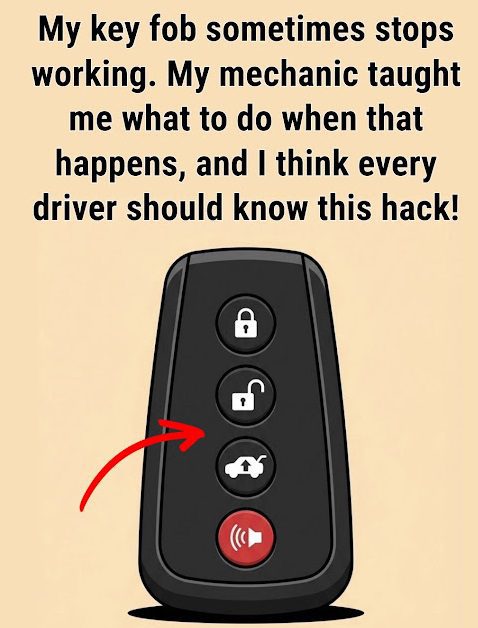
Few things are more frustrating than pressing your key fob and hearing… nothing. Before you assume it’s broken or rush to the dealership, try these simple, science-backed troubleshooting steps—most take under 2 minutes and could save you time and money.
1. Replace the Battery (The #1 Fix!)
Why it works: 90% of “dead” fobs just need a fresh battery.
How to do it:
Use a small flathead screwdriver to gently pry open the fob (check seams for a notch).
Replace the CR2032 (most common) or CR2025 battery—available at drugstores or supermarkets.
Match the + side up as shown inside the case.
Pro tip: Keep a spare battery in your glove compartment!
2. Test for Signal Interference
Why it fails: Electronics (phones, laptops, chargers) or metal objects can block the fob’s signal.
Fix:
Move away from your car’s electronics or metal surfaces.
Hold the fob next to your head (your body acts as an antenna—yes, really!).
Try unlocking while standing closer to the car (within 3–5 feet).
3. Use the Emergency Key (Hidden Inside!)
Most fobs have a mechanical key hidden inside:
Slide or twist the release button to pull out a small metal key.
Use it to manually unlock your driver’s door.
Once inside, many cars let you start the engine by:
Holding the fob against the start button (push-to-start models), or
Inserting the fob into a dedicated slot (check your manual).
4. Reprogram the Fob (After Battery Change)
Some vehicles require re-syncing after a battery swap:
Common method: Sit in the car, close all doors, then press the lock button 4–6 times while holding the fob near the ignition.
Check your owner’s manual—each brand (Toyota, Ford, Honda, etc.) has a unique sequence.
If unsure, search: “[Your car make/model] reprogram key fob” on YouTube—many dealers post official guides.
5. Warm It Up (Cold Weather Hack)
In freezing temps, batteries lose power temporarily.
Fix: Warm the fob in your hands or pocket for 1–2 minutes before trying again.
6. Check for Physical Damage
Look for:
Cracks in the casing
Corrosion on battery contacts
Sticky or unresponsive buttons
Clean contacts: Rub gently with a cotton swab dipped in rubbing alcohol.
When It’s Time to Call a Pro
If none of these work, consider:
Faulty receiver in your car (rare but possible)
Water damage to the fob’s circuit board
Lost programming (may need dealer reset)
Cost-saving tip: Auto parts stores (like AutoZone) often test fobs for free and can sell replacement batteries or fobs at half the dealer price.
Final Thought
“A key fob isn’t magic—it’s just tiny tech that needs a little care.”
Most “failures” are simple fixes. So take a breath, try these steps, and get back on the road—without the stress.
Because sometimes, the smallest battery holds the biggest relief.